





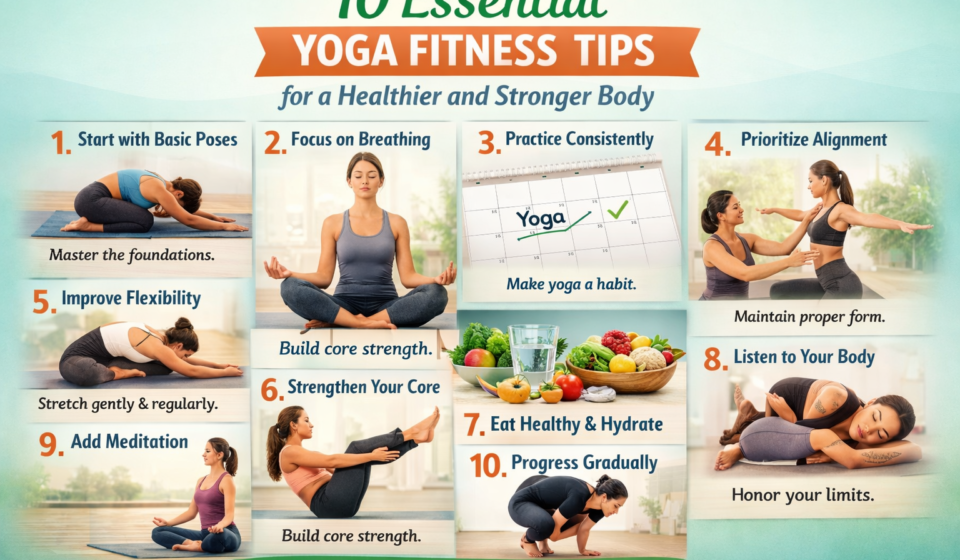
10 Essential Yoga Fitness Tips for a Healthier and Stronger Body

Yoga is more than just a form of exercise—it is a complete wellness practice that improves physical strength, mental clarity, flexibility, balance, and overall health. Whether you are a beginner or someone who has been practicing yoga for years, following the right approach can help you maximize the benefits of your yoga journey.
In today’s fast-paced lifestyle, many people struggle with stress, poor posture, lack of physical activity, and chronic health issues. Yoga offers a natural and effective solution to these challenges. By combining mindful breathing, stretching, and strengthening exercises, yoga helps create harmony between the body and mind.
If you want to improve your fitness level, increase your energy, and build a healthier body, here are 10 essential yoga fitness tips that can transform your overall well-being.
1. Start with Basic Yoga Poses
One of the biggest mistakes beginners make is attempting advanced poses too soon. Yoga is a gradual process that requires patience and consistency.
Start with beginner-friendly poses such as:
- Mountain Pose (Tadasana)
- Child’s Pose (Balasana)
- Downward Dog (Adho Mukha Svanasana)
- Cat-Cow Stretch
- Cobra Pose (Bhujangasana)
These foundational poses help improve flexibility, posture, and body awareness while preparing your muscles for more challenging movements.
Remember, mastering the basics creates a strong foundation for long-term success in yoga.
2. Focus on Proper Breathing Techniques
Breathing is at the heart of yoga practice. Proper breathing improves oxygen flow, enhances concentration, and supports physical performance.
Some effective yoga breathing techniques include:
Deep Belly Breathing
This technique involves breathing deeply into the abdomen rather than the chest, promoting relaxation and better lung capacity.
Alternate Nostril Breathing
This calming practice balances energy levels and improves focus.
Ujjayi Breathing
Often called “ocean breath,” this technique creates a soothing sound and helps maintain rhythm during yoga sessions.
Synchronizing breath with movement allows your body to move more efficiently and reduces fatigue during workouts.
3. Practice Consistently
Consistency is one of the most important factors in achieving fitness results through yoga.
Instead of practicing intensely once a week, aim for shorter but regular sessions. Even 20 to 30 minutes daily can produce noticeable improvements in flexibility, strength, and mental well-being.
Create a realistic schedule that fits your lifestyle. Morning yoga can boost energy levels, while evening sessions can help reduce stress and improve sleep quality.
The key is to make yoga a habit rather than an occasional activity.
4. Prioritize Proper Alignment
Correct alignment ensures that yoga poses are performed safely and effectively.
Improper posture during yoga can lead to muscle strain and injuries. Pay close attention to the positioning of your:
- Spine
- Shoulders
- Hips
- Knees
- Feet
If possible, learn from a qualified yoga instructor who can guide you through proper form and adjustments.
Using mirrors, instructional videos, or yoga apps can also help you monitor and improve your alignment.
5. Improve Flexibility Gradually
Many people believe they need to be flexible before starting yoga. In reality, yoga helps develop flexibility over time.
Avoid forcing your body into difficult positions. Instead:
- Move slowly into stretches
- Respect your body’s limits
- Hold poses comfortably
- Breathe deeply during stretches
Regular practice naturally lengthens muscles and improves joint mobility.
Remember that flexibility gains take time. Comparing yourself to others can be discouraging, so focus on your personal progress.
6. Strengthen Your Core Muscles
A strong core is essential for overall fitness, stability, and injury prevention.
Many yoga poses actively engage the abdominal and back muscles, helping build core strength naturally.
Effective yoga poses for core development include:
Plank Pose
Strengthens the entire core and upper body.
Boat Pose (Navasana)
Targets abdominal muscles and improves balance.
Side Plank
Enhances oblique strength and shoulder stability.
Dolphin Pose
Builds strength in the shoulders, arms, and core.
Practicing these poses regularly improves posture, balance, and athletic performance.
7. Stay Hydrated and Eat Nutritious Foods
Nutrition plays an important role in supporting your yoga fitness goals.
Before yoga practice:
- Eat light meals
- Avoid heavy or greasy foods
- Allow sufficient digestion time
After practice:
- Rehydrate with water
- Consume nutrient-rich foods
- Include protein for muscle recovery
A balanced diet should include:
- Fresh fruits
- Vegetables
- Whole grains
- Lean proteins
- Healthy fats
Proper hydration and nutrition improve energy levels, endurance, and recovery after yoga sessions.
8. Listen to Your Body
One of the fundamental principles of yoga is self-awareness.
Your body communicates important signals about fatigue, tension, and readiness. Ignoring these signals can lead to discomfort or injury.
Pay attention to:
- Pain versus normal stretching sensations
- Energy levels
- Recovery needs
- Muscle soreness
If a pose feels painful, modify it or take a break. Yoga is not about pushing through pain—it is about developing a deeper connection with your body.
Practicing mindfully helps you progress safely and sustainably.
9. Incorporate Meditation and Mindfulness
Yoga is not limited to physical postures. Mental wellness is equally important.
Adding meditation and mindfulness practices can significantly enhance your fitness journey.
Benefits include:
- Reduced stress
- Better concentration
- Improved emotional balance
- Enhanced self-awareness
- Increased motivation
Spend 5–10 minutes after each yoga session practicing meditation. Sit comfortably, focus on your breathing, and observe your thoughts without judgment.
This simple habit can improve both mental and physical performance over time.
10. Challenge Yourself Progressively
As your strength and flexibility improve, gradually introduce more advanced yoga poses and sequences.
Progressive challenges help prevent plateaus and keep your practice exciting.
Examples of intermediate and advanced poses include:
- Crow Pose
- Headstand
- Wheel Pose
- Warrior III
- King Pigeon Pose
However, progression should always be gradual. Never rush into advanced poses without proper preparation.
Use props such as yoga blocks, straps, and bolsters to support your practice and build confidence safely.
Additional Benefits of Regular Yoga Practice
Beyond improving physical fitness, yoga offers numerous health benefits that positively impact everyday life.
Better Posture
Yoga strengthens the muscles that support proper spinal alignment, helping reduce neck, shoulder, and back pain caused by prolonged sitting.
Increased Energy Levels
Regular yoga improves blood circulation and oxygen delivery throughout the body, leading to higher energy levels and reduced fatigue.
Enhanced Balance and Coordination
Many yoga poses challenge stability and body control, helping improve coordination and reducing the risk of falls.
Stress Management
Yoga activates the parasympathetic nervous system, promoting relaxation and lowering stress hormones.
Improved Sleep Quality
Relaxation techniques and mindful breathing help calm the nervous system, making it easier to fall asleep and stay asleep.
Better Athletic Performance
Athletes often use yoga to improve flexibility, mobility, recovery, and mental focus, leading to enhanced performance in other sports and fitness activities.
Creating a Sustainable Yoga Routine
To maintain long-term success, create a yoga routine that is enjoyable and realistic.
Consider these simple strategies:
- Set achievable goals
- Practice at the same time each day
- Create a dedicated yoga space
- Track your progress
- Join a yoga community
- Celebrate small improvements
Consistency is far more valuable than perfection. Even brief daily sessions can lead to significant health improvements over time.
Final Thoughts
Yoga is one of the most effective and accessible ways to build a healthier, stronger, and more balanced body. By focusing on proper breathing, consistency, alignment, flexibility, strength, nutrition, and mindfulness, you can unlock the full potential of your yoga practice.
The journey toward better fitness through yoga is not about achieving perfect poses—it is about creating a sustainable lifestyle that supports physical health, mental clarity, and emotional well-being.
Start where you are, practice regularly, and trust the process. By following these 10 essential yoga fitness tips, you can enjoy lasting improvements in strength, flexibility, energy, and overall quality of life while building a healthier future for yourself.